
Eduardo Vilaro looks at bodies all the time. He has to. As artistic director and CEO of Ballet Hispánico, Vilaro watches the company’s dancers at work, how they occupy a space, and how the actual lines of their bodies appear in that space and, thus, animate it. “I’m not a painter, though I love art, but I can say that I always paint spaces,” Vilaro notes, referencing the works he choreographs. “I paint with bodies.”

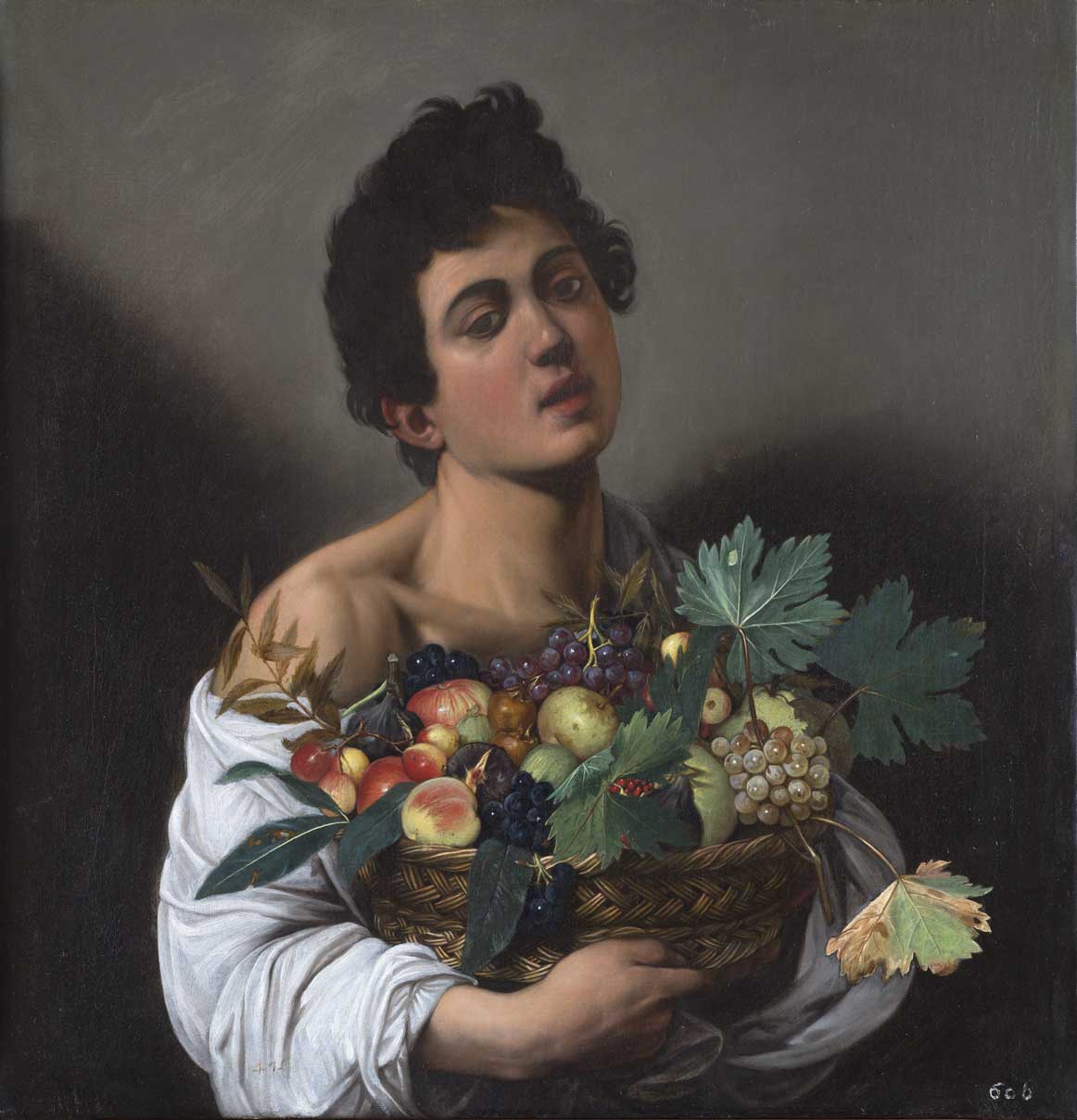
Among his favorite bodies is one depicted by Caravaggio, “Boy with a Basket of Fruit,” that is in the permanent collection of the Borghese Gallery in Rome. It was years ago, when New York’s Metropolitan Museum of Art mounted a Caravaggio exhibition, that Vilaro first saw this painting; that was also the first time he’d seen any work by Caravaggio. “To be honest, I was not familiar with Caravaggio before that, even in my fine arts classes in a school run by Jesuits, who really do provide the best full education. But since the moment I saw this work, I’ve not forgotten it.”
A former dancer himself, the Cuban-born Vilaro (who came to America as a boy in 1969) continues to marvel at the sheer physicality and musculature of Caravaggio’s model. “I always notice the particulars of a gaze, whether it’s a dancer who looks up while on stage or a figure on canvas. This one is inviting a gaze from the viewer.”
Vilaro cites the sheer sensuality of this model, who scholars agree was a 16-year-old friend of Caravaggio’s and fellow painter. “He has his white shirt lowered from the shoulder, which gives a homoerotic feel to it. His neck is thick, but as you follow the lines, it thins and makes for a prominent jawline. His shoulder is muscular and mas-culine, but has a feminine bend to it. The model invites you to look at his whole body. I look at this and ask, ‘What is going on in this young man’s mind?’”
Vilaro is also attracted to the way Caravaggio found his models, using “ordinary” citizens to assume regal poses; some were peasants or, in some cases, prostitutes. “As a man of color, I am fascinated by how Caravaggio utilized people who weren’t considered noble, people who were maybe marginalized. For me, the subject here is experiencing some kind of suffering simply through who he is in life.”
The year 2024 marked Vilaro’s 15th season as Ballet Hispánico’s artistic director, and while he has long remained among the dance world’s most creative forces, he has pushed himself further by choreographing pieces based on artworks, particularly those by Juan de Pareja (1606–1670), the Afro-Hispanic painter who worked closely with Diego Velázquez. Last July, the Met presented several performances of a work it had commissioned from Vilaro; “Buscando a Juan (Seeking Out Juan)” accompanied the museum’s exhibition of Pareja’s art and was created specifically to be presented on its historic patio relocated from the castle of Vélez Blanco.
“The moment I got the commission, I delved into it,” Vilaro recalls. “It was a powerful moment and experience for me, and the chance to work closely with curators. I was able to dive deeply into this man’s life. There were so many connections to my own life, as someone of mixed race. I was able to utilize art as a jumping-off point, a catalyst for something new.”
During a recent teaching term in Venice, Vilaro became entranced with the works of Tintoretto. “This summer, though, I’m going to Rome, where one of my visits will be to see the boy with the fruit again.”
The above article was written by David Masello for Fine Art Connoisseur
View more artist and collector profiles here at FineArtConnoisseur.com.